

Intrusive Thoughts
Why They Feel So Real & How to Be Free of Them

Worrisome, obsessive, intrusive, or racing thoughts are some of the most common and distressing symptoms of anxiety.
These intrusive thoughts often appear automatically, with little to no perceived control over their presence. They can feel sudden, repetitive, scary and overwhelming.
They may involve ongoing worries about health, life circumstances, loved ones, or even negative thoughts about oneself, which can contribute to a poor self-image. In many cases, these thoughts also take the form of repetitive mental loops about past interactions, current situations, or possible future events.
Understanding the Nature of Thoughts
Many thoughts are created through:
- Subconscious beliefs
- Unresolved experiences from the past
- The mind attempting to control life
- A release of built-up mental or emotional energy
In the moment, they may feel factual and worthy of your attention, but they are not necessarily significant or true.
Why do your thoughts never seem to stop
The main reason your thoughts feel constant is due to a combination of mental overactivity and the mind’s tendency to try to resolve internal discomfort or external issues.
When you feel anxious or unsettled, the mind attempts to make sense of how you are feeling. This creates a cycle of thinking where the brain continuously searches for answers, clarity, or relief.
You may find yourself going around in circles mentally throughout the day, trying to figure things out in an attempt to escape your current state.
Also, when suffering from anxiety, thoughts tend to feel more intense or exaggerated, and situations may appear far more troublesome and significant than they really are. Some people even struggle to sleep because their minds continue processing the day’s events or worries.
The anxious mind often creates problems and then attempts to solve them, even when no real issue exists. This can make small concerns feel much larger and more persistent than they would under calmer conditions.
Over time, this pattern of overthinking can become habitual, creating an experience where the mind never switches off.
As a result, the mind remains active and does not get the rest it needs to naturally settle.
Your thoughts often reflect your emotional state
Thoughts can be seen as a form of energy that passes through your awareness and are often influenced by the emotional or mental state you are currently experiencing.
For example:
- When you feel low or depressed, your thoughts may take on a more negative tone
- When you feel angry, your thoughts may reflect this anger
- When you feel happy, your thoughts are more likely to be positive and uplifting
- When you are feeling anxious or fearful, your thoughts are more likely to appear worrying or intrusive.
Because of this, intrusive thoughts often feel like they are reflecting reality, rather than reflecting your current emotional state.
Why can’t you control your thoughts?
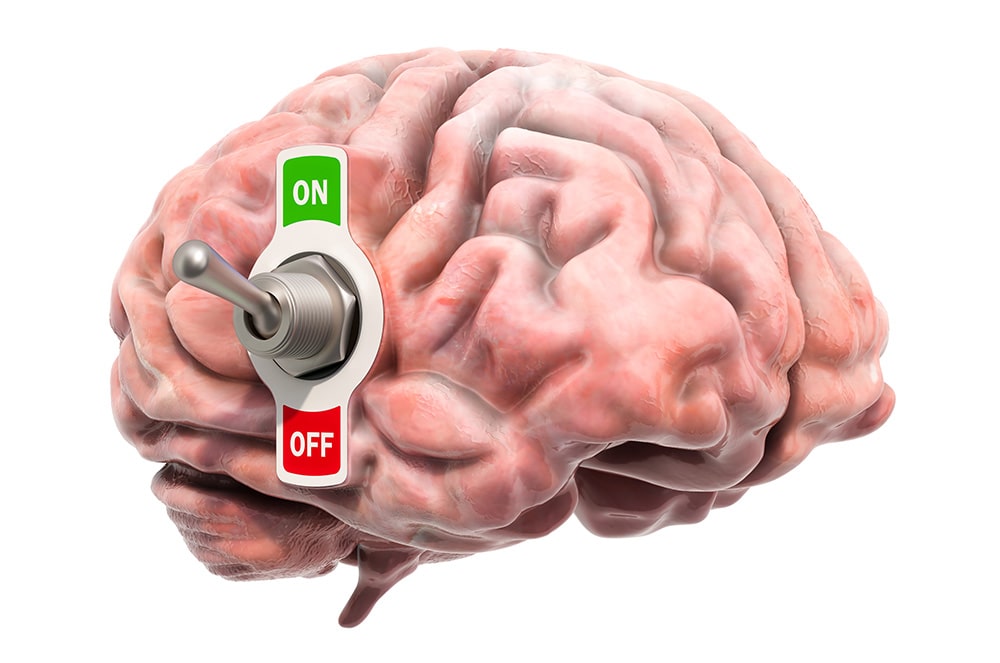
The simple truth is that you cannot directly control your thoughts. Thoughts arise automatically, just as your heartbeat or breathing functions without conscious effort. If it were possible to fully control thoughts, you would be able to eliminate negative or intrusive thinking and maintain only positive thoughts at all times. However, experience shows this is not how the mind works.
Trying to control, suppress, or force your thoughts to change often leads to the opposite effect — increased mental activity, more overthinking, and greater frustration.
The more attention you give to controlling or suppressing thoughts, the more active the mind tends to become.
Why do my intrusive thoughts come with such speed and frequency?

Intrusive thoughts often feel rapid, repetitive, and difficult to control. This frequency is largely linked to patterns of overthinking and mental repetition.
When you frequently focus on your thoughts — trying to analyse, fix, or make sense of them — the mind becomes more active. This creates a cycle where thinking feeds more thinking, increasing both the speed and frequency of intrusive thoughts.
Intrusive thoughts tend to gain momentum through repeated mental engagement.
This can include:
- Constantly analysing how you feel
- Trying to solve internal discomfort
- Worrying about situations in your life
- Searching for certainty or answers
In doing this, the mind becomes conditioned to stay active, which can make thoughts feel continuous and difficult to slow down.
This is why the mind may feel:
- Exhausted
- Overactive
- Frantic or out of control
Many people describe this experience as wanting an “off switch” for their thinking, but being unable to find it.
Key Insight
Intrusive thoughts become more frequent not because they are inherently uncontrollable, but because of the level of attention and engagement they receive.
When the mind is repeatedly used to try to manage itself, it often maintains its level of activity rather than settling.
Subconscious beliefs play a role in our negative thinking
As stated, thoughts can be influenced by subconscious beliefs we have. If we have negative thoughts about ourselves, then we may interpret situations negatively and not see them for what they truly are, leading to more worrisome thinking.
For example, imagine you wave at someone you know across the street, but they do not respond. A thought may arise like:
“Did I do something wrong?”
If this thought is given attention, the mind may begin to generate further interpretations, such as frustration or self-doubt. This can lead to extended periods of overthinking and internal dialogue, including statements like:
- “Why did they ignore me?”
- “I’ve always been there for them”
- “I won’t bother with them again”
In this situation, the initial thought is reinforced through repetition and emotional engagement, causing it to persist.
When new information becomes available — for example, the person later explains they did not see you — the mind is able to resolve the uncertainty. As a result, the thought loses its importance and naturally fades.
This proves that thoughts are not always facts and can be driven by the thoughts you have about yourself. Someone who did not have subconscious thoughts around their self-worth would have most likely interpreted the situation correctly, in that the person did not see them.
Letting Thoughts Pass Without Engagement
When negative or intrusive thoughts arise, the better approach is to allow them to pass without resistance, analysis, or belief.
The key is to reduce engagement rather than attempt to control or eliminate the thoughts. Even if a thought repeats itself, it does not need to be solved or responded to.
With reduced attention and involvement, thoughts naturally lose momentum and importance and begin to fade on their own.
How Thinking Shapes Your Experience

Your thoughts play a major role in how you experience life. Since no two people think in the same way, everyone experiences the world differently.
When your thoughts are calm and balanced, your experience tends to feel more stable and manageable. However, when thoughts become anxious, negative, or fearful, they can create the impression that the world itself is unsafe or overwhelming.
While your internal experience may change, the external world always remains the same. It is your perception of it that is influenced by your thinking, which changes, not the world itself.
The Role of Belief in Intrusive Thoughts
Intrusive thoughts only begin to affect you when they are believed and identified with.
When you attach meaning or importance to a thought:
- It feels more real
- It influences your emotions
- It can begin to shape your behaviour
This can lead to patterns such as avoidance, excessive worry, or negative thinking.
Without belief and identification, intrusive thoughts lose their impact and naturally fade.
Key Takeaway
Intrusive thoughts may feel significant, but they do not have inherent meaning or importance.
Their impact comes from the level of belief and attention they receive. By stepping back from identifying with them, their influence naturally weakens, allowing for a calmer and more balanced experience of life.
Your past experiences create many of your thinking patterns

Many of your current thought patterns are influenced by past experiences.
The mind learns from previous situations and uses that information to try to predict or prevent future outcomes. While this can sometimes be helpful, it can also lead to inaccurate or unhelpful thinking patterns.
Example: Relationship-Based Thoughts
For example, imagine someone who has been cheated on in previous relationships. As a result, they may develop thoughts such as:
“He will do the same to me.”
These thoughts arise as a protective response based on past experiences. However, when they are believed and acted upon, they can begin to affect behaviour — such as seeking constant reassurance or becoming overly suspicious.
Over time, this can place strain on a new relationship, even if there is no real reason for concern.
Believing this thought and then acting upon it can become a self-sustaining loop.
The person believes the thought that their partner will cheat on them, so they seek constant reassurance and try to control the other person’s behaviour, which only serves to drive them away. Once the person leaves, the mind concludes it got it right, and others will leave them, so the thought then appears even stronger in the next relationship, leading to the same outcome.
If the thought had been recognised for what it was — a learned response rather than a certainty — it would have been easier to create distance from it and not respond in the usual way.
A similar pattern can occur with anxiety.
For instance, if someone experiences anxiety in a supermarket, the mind may later associate that location with danger. The next time they consider going back, a thought may arise:
“This is where you felt anxious — avoid it.”
In this case, the mind is attempting to protect you by avoiding a perceived threat. However, there is no danger in the location itself — the association has simply been created based on a past experience, and so the thought itself is not reflecting reality.
The key point in both experiences is that you do not have to follow the initial thought or emotional response once you see the truth behind them. When you stop seeing them as the truth and create distance from them, then you can act independently of them.
Not only does this allow you to live the life you wish, but also the thoughts, when not showered with belief or followed, will begin to diminish.
Understanding the Mind’s Protective Response
The mind is designed to identify patterns and keep you safe. However, it does not always distinguish between real danger and perceived danger.
Because of this, it can sometimes create false associations, leading to unnecessary avoidance or fear.
Supermarket Example
- Thoughts ( “This is unsafe”)
- Emotional reactions (Anxiety or fear)
- Behaviour (Avoid shopping)
Relationship Example
- Thought ( “They will leave me”)
- Emotional reaction (Fear, insecurity)
- Behaviour (Seek Reassurance)
How to Respond Differently
When you begin to recognise these patterns, you can respond differently.
Instead of automatically reacting to the thought or emotion, you can:
- Acknowledge it as a learned response
- Question whether it reflects a real threat
- Choose not to act on it
Over time, this reduces the intensity of the response and helps break the cycle. The less belief you put into a thought and the less you follow its influence, the weaker it becomes.
Key Takeaway
Past experiences can strongly influence how you think and respond to situations.
However, thoughts based on past events are not always accurate in the present. By recognising them as conditioned patterns rather than facts, you can reduce their impact and respond in a more balanced way.
Remember, thoughts are not the problem here; you can think whatever you wish. It is your identification and belief in them that creates the problem. Only then can they take over and dictate how you live your life.
Some very wise person once said to me, “Paul, your mind is not talking to you; it is just talking; you really don’t have to listen to it; be your own master and make your own way in life”.
How do I release past negative thoughts?

Holding on to past experiences can cause thoughts to repeat continuously in the mind.
When you revisit a situation over and over — such as how someone treated you or a negative event — the memory remains active. The more attention it receives, the more it is reinforced, which can disturb your peace of mind.
Why Letting Go Is Important
The experience you are thinking about is no longer happening. It exists only as a memory in the present moment.
It is not the past event itself that continues to cause distress, but the repeated focus on it. When attention is continually directed towards the memory, it maintains its momentum and influence.
By allowing the thought to pass rather than revisiting it, the mind gradually begins to let the event go.
How Thoughts Lose Momentum
Memories are essentially thought patterns. Like any other thought, they rely on attention and engagement to stay active.
When you:
- Stop replaying the situation
- Reduce emotional involvement
- Allow the thought to exist without revisiting it
The memory begins to lose intensity and fades over time.
Letting Go Without Suppression
Letting go does not mean forcing yourself to forget or ignore what happened.
Instead, it means:
- No longer feeding the thought with attention
- Allowing it to arise without engaging with it
- Accepting that it does not need to be resolved repeatedly
In some cases, it may be helpful to talk through more traumatic experiences in order to let them go. However, repeatedly going over minor events or conversations often keeps them active far longer than necessary.
Key Takeaway
Past experiences can only continue to affect you if they are repeatedly revisited in the present.
By reducing your engagement with these thoughts and allowing them to pass naturally, their impact gradually fades, creating more mental space and peace.
Believing you have control over life
Another reason for overthinking is the belief that you have control over life. Of course, we do have some influence over how our lives unfold through the choices we make—but this is not the type of control I am referring to.
I am talking about the belief that life and other people should follow our rules—that nothing should ever go wrong, and that people should behave in certain ways.
When you truly understand that life will not always go your way and that both good and bad things will happen, it can significantly reduce negative thinking. Thoughts like “Why did this happen to me?” or “This is not fair” begin to lose their hold.
The biggest shift in my own thinking came when I started allowing life to unfold as it does, without placing expectations on it. I accepted that things would not always go my way. Instead of complaining or worrying about what had happened, my response became: “This is something I need to deal with.”
I also let go of worrying about future events that may or may not happen. I realised that if they do happen, they will happen regardless—and worrying about them only harms me in the present.
The same principle applies to other people. Many of us become frustrated or angry about how others behave, leading to thoughts like “Why did they do that?” or “Why did they say that?”
However, we all have different personalities, and we have no real control over how others act. Once you accept this, you naturally become less upset or angry. If someone’s behaviour truly affects you, the only control you have is to distance yourself from them—rather than trying to change them.
Finally, remember that you are unique. Don’t put yourself down for not achieving what you think you should, or for not being as intelligent or attractive as someone else. We are all born with different abilities and qualities. Comparing yourself to others or believing you should have achieved more only wastes mental energy and creates unnecessary self-criticism.
Summary: Understanding and Letting Go of Intrusive Thoughts
The key message from this article is that thoughts themselves are not the problem — it is the level of identification and involvement with them that creates distress.
When you give thoughts too much attention and belief, they begin to feel important and real. This can lead to overthinking, emotional discomfort, and a cycle of constant mental noise.
Breaking the Cycle of Overthinking
Trying to control, suppress, or “fix” your thoughts often keeps the mind active.
Instead, a more effective approach is to:
- Allow thoughts to arise without resistance
- Avoid engaging with or analysing them
- Step back and observe them without identifying with them
When you reduce your involvement, you stop adding more thinking on top of thinking.
Creating Distance from Your Thoughts
One helpful shift is to change how you relate to your thoughts.
For example, instead of saying:
“I keep thinking this awful thought”
You might say:
“My mind produced this thought”
This simple change creates distance and helps you see thoughts as something the mind generates, rather than something personal or meaningful.
Thoughts Are Not Personal or Permanent
No thought is inherently more important than another, and thoughts are not personal.
They come and go mainly based on your mental and emotional state and the subconscious beliefs you have. Without belief and attention, they lose their influence and naturally fade.
Allowing the Mind to Settle Naturally
The mind’s natural state is calm and balanced. Ongoing stress, worry, and overthinking can push it into a more active and unsettled state.
However, the mind does not need to be forced back into calmness.
When you stop interfering — by no longer trying to control or suppress your thoughts — the mind gradually begins to settle on its own.
Letting Go of Worry About the Future
Worrying about future events does not prevent them—it only creates unnecessary stress in the present.
If something is going to happen, it will happen regardless of how much you think about it.
Reducing this habit can significantly quiet the mind.
Final Takeaway
You do not need to eliminate or control your thoughts.
By stepping back, allowing them to pass, and reducing your identification with them, the mind can return to a quieter and more peaceful state naturally.
 My book At Last a Life has sold over 200,000 copies worldwide and tells the story of how I recovered from 10 years of anxiety and panic.
If you’re tired of trying endless techniques and just want your life back, At Last a Life explains the understanding and approach that helped me fully recover and has helped countless others do the same.
Get the eBook instantly, or order the physical paperback directly through my secure shop. 👉 Order Direct from My Shop
You can also find the Kindle edition and paperback on Amazon and read the great reviews. 👉 Order on Amazon
Prefer the audiobook? 🎧 Now Available on Audible